
 By Bapi Mondal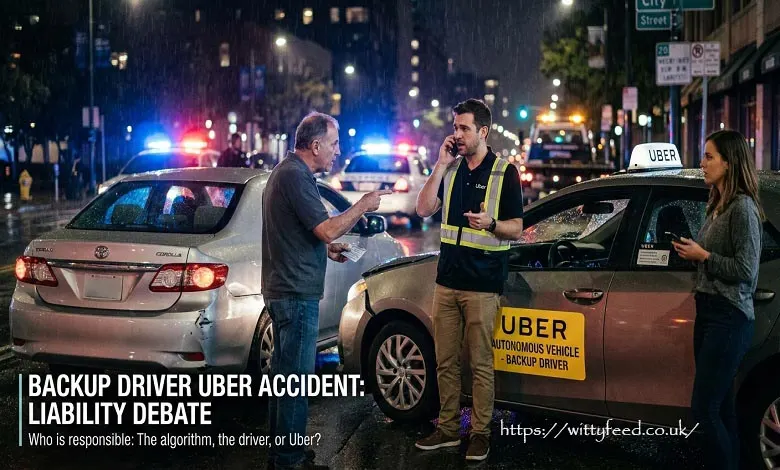
Self-driving technology has been promoted as the future of transportation. Companies like Uber have invested billions of dollars into autonomous vehicle research to reduce traffic accidents and improve mobility services. Yet as promising as the technology may be, accidents involving self-driving vehicles raise complicated legal questions. One of the most confusing issues for victims and lawyers alike is backup driver Uber accident liability. When an autonomous Uber vehicle crashes while a human safety operator is present, determining who is responsible can be far more complicated than a normal car accident.
Was the backup driver at fault? Did the vehicle’s autonomous system malfunction? Or does the responsibility fall on Uber or the technology developers behind the self-driving system?
Understanding uber autonomous backup driver accident liability requires looking at several factors, including human supervision, company policies, and insurance coverage.
This guide explains how liability works when an uber self driving backup driver causes accident liability insurance claim arises, what role the backup driver plays, and how victims may pursue compensation.
Before discussing uber backup driver liability causes accident situations, it is important to understand the role of the backup driver.
During autonomous vehicle testing and limited deployment phases, companies often place a trained safety operator in the driver’s seat. This person is usually called a backup driver, safety driver, or vehicle operator.
Although the vehicle’s autonomous software controls most driving functions—such as steering, braking, and navigation—the backup driver remains responsible for supervising the system.
Typical responsibilities of a backup driver include:
- Monitoring road conditions
- Watching the vehicle’s automated behaviour
- Taking manual control if the system fails
- Responding to system alerts or warnings
- Preventing potential collisions
Because a human operator remains present, determining backup driver Uber accident liability often involves examining both the actions of the driver and the behaviour of the autonomous system.
Traditional car accidents are usually easier to analyze. In most cases, investigators determine which driver was negligent and assign liability accordingly.
However, when an autonomous vehicle is involved, several possible parties may share responsibility.
Potentially responsible parties include:
- The Uber backup driver
- Uber is the rideshare company
- Autonomous software developers
- Vehicle manufacturers
- Third-party drivers
This is why cases involving Uber autonomous backup driver accident liability often require extensive investigation and expert analysis.
Unlike normal accidents, investigators may examine software logs, sensor data, and system warnings in addition to human behaviour.
When analyzing uber autonomous backup driver accident liability, courts typically focus on the role of the human safety driver.
Even though the vehicle operates autonomously, the backup driver is expected to remain alert and ready to take control.
If the driver fails to intervene when necessary, they may be considered negligent.
Examples of backup driver negligence may include:
- Using a phone while supervising the vehicle
- Failing to watch the road
- Ignoring system warnings
- Reacting too slowly to a hazard
In such situations, uber backup driver liability causes accident cases to result in legal claims against the driver personally.
However, the backup driver is not always solely responsible.
Uber may also share responsibility when a crash occurs involving one of its autonomous vehicles.
Even if a human backup driver was present, the company operating the technology may still face legal liability.
Situations where Uber could be responsible include:
- Faulty autonomous software
- Inadequate safety testing
- Improper driver training
- Disabled safety systems
- Poor maintenance of vehicle sensors
In some cases, courts may apply vicarious liability, meaning a company can be held responsible for the actions of its employees or contractors.
This means that even if the backup driver made a mistake, Uber could still be partially responsible for damages.
Insurance coverage plays a crucial role in these cases.
Uber carries commercial insurance policies designed to cover accidents involving vehicles operating on its platform. When an uber self driving backup driver causes accident liability insurance claim arises, and investigators determine which policy applies.
The available coverage may depend on whether:
- A passenger was inside the vehicle
- The driver was logged into the app
- The vehicle was operating in autonomous mode
In many situations, Uber’s insurance policy may provide coverage of up to $1 million for injuries and property damage.
This coverage is intended to protect both passengers and other road users.
However, determining coverage may still involve legal disputes when uber self driving backup driver liability accident policy questions arise.
Insurance coverage in Uber accidents works differently from traditional car accidents. Because Uber operates through a rideshare platform, the amount of insurance coverage available depends on what the driver was doing at the time of the crash.
When questions about backup driver Uber accident liability arise, investigators usually begin by identifying the driver’s status in the Uber system. This determines which insurance policy applies and how much coverage may be available for injured victims.
The first period begins when a driver turns on the Uber app and becomes available to accept ride requests. At this stage, the driver has not yet accepted a trip and is simply waiting for a passenger.
During this period, Uber provides limited liability coverage. Typical coverage may include:
- Up to $50,000 for injuries per person
- Up to $100,000 total injury coverage per accident
- Up to $30,000 for property damage
If an accident occurs during this time and the uber backup driver liability causes accident, Uber’s insurance may still apply, although the driver’s personal auto insurance could also be involved.
Once a driver accepts a ride request, the situation changes. The driver is now actively working through the Uber platform and travelling to pick up the passenger.
At this stage, Uber provides higher insurance coverage because the driver is officially engaged in a rideshare trip. If an accident happens while the vehicle is on the way to pick up a passenger, Uber’s commercial insurance may help cover injuries and property damage.
This coverage may become especially important when analyzing uber self driving backup driver causes accident liability insurance situations.
The highest level of insurance coverage applies when a passenger is inside the Uber vehicle.
During an active ride, Uber typically provides liability coverage of up to $1 million for injuries and damages caused by an accident. This protection applies to passengers, pedestrians, cyclists, and other drivers involved in the crash.
This level of coverage is particularly relevant in cases involving uber autonomous backup driver accident liability, since these accidents may involve multiple parties and complex investigations.
Determining fault in autonomous vehicle crashes often requires a complex investigation.
Authorities and legal experts may analyze several types of evidence, including:
- Vehicle sensor recordings
- Autonomous software logs
- Driver monitoring cameras
- Event data recorders
- Dashcam footage
- Witness statements
By analyzing this data, investigators attempt to determine whether the crash resulted from human error, system failure, or a combination of both.
Because of the technical complexity, backup driver Uber accident liability cases often involve expert testimony from engineers and accident reconstruction specialists.
One of the most widely discussed incidents involving autonomous rideshare vehicles occurred during Uber’s self-driving testing program in Arizona.
An autonomous Uber vehicle struck a pedestrian while operating in self-driving mode with a backup driver present. Investigators later found that the safety driver failed to intervene in time.
The case sparked a global debate about uber autonomous backup driver accident liability and raised questions about both human supervision and autonomous system safety.
This incident highlighted the challenges of determining Uber backup driver liability in accident situations when both human and technological factors are involved.
When someone is injured in an accident involving an autonomous Uber vehicle, determining responsibility can be challenging. Unlike normal car accidents, backup driver Uber accident liability cases may involve several different parties.
Potential claims may be filed against:
- The backup driver
- Uber is the operating company
- The vehicle manufacturer
- Software developers
- Other negligent drivers
Compensation may include:
- Medical expenses
- Lost income
- Pain and suffering
- Rehabilitation costs
- Property damage
Passengers injured during a rideshare trip generally have strong legal protections because commercial insurance coverage usually applies.
However, determining liability in uber self driving backup driver liability accident policy cases can be complex, which is why many victims seek legal advice.
If you are involved in an accident involving a self-driving Uber vehicle, taking the right steps immediately can help protect your legal rights.
Important actions include:
- Seek medical attention as soon as possible.
- Call the police and file an accident report.
- Take photos of the accident scene and vehicle damage.
- Collect witness contact information.
- Save your Uber trip information from the app.
- Consult an attorney experienced in rideshare accident cases.
Because backup driver Uber accident liability cases can involve multiple responsible parties, early legal guidance can be extremely helpful.
Autonomous vehicles are still a developing technology, and legal frameworks continue to evolve.
Governments and regulators are working to establish clearer rules regarding liability when self-driving vehicles are involved in accidents.
Future laws may address questions such as:
- Whether autonomous systems should be treated as legal drivers
- How responsibility should be divided between humans and AI
- Whether manufacturers should bear greater responsibility for system failures
Until clearer laws are established, courts will likely continue examining each uber self driving backup driver causes accident liability insurance case individually.
As autonomous vehicles become more common on public roads, legal questions surrounding backup driver Uber accident liability will continue to evolve.
When a crash occurs involving an autonomous rideshare vehicle, determining responsibility may involve both human actions and technological performance.
Understanding uber autonomous backup driver accident liability, insurance coverage rules, and legal options can help accident victims protect their rights and pursue fair compensation.
While self-driving technology promises safer roads in the future, the legal system is still adapting to the complex realities of autonomous transportation.
A: Backup driver Uber accident liability refers to legal responsibility when an accident occurs involving an autonomous Uber vehicle supervised by a human safety driver.
A: Yes. If the backup driver was distracted or failed to intervene when necessary, they may be considered negligent and liable for the crash.
A: Yes. Uber typically maintains commercial liability insurance that may provide coverage up to $1 million for injuries and property damage.
A: In many cases, victims may pursue claims against Uber, the backup driver, or other responsible parties, depending on the circumstances of the accident.